Breimann&Cie
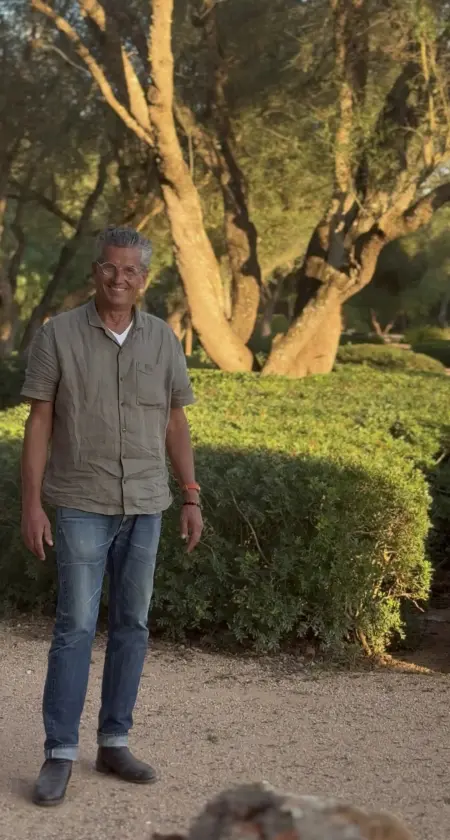
Drought-tolerant, robust, evergreen: the Wild Pistachio – more precisely Pistacia lentiscus, also known as the mastic shrub – is one of the most resilient plants of the Mediterranean. In our projects across Spain and Italy, we use it purposefully: as a climate-resilient design element, a structure-forming shrub, and an ecologically valuable alternative to classic boxwood.
Pistacia lentiscus is native to Spain, Italy, and especially the Balearic Islands. A member of the sumac family, the shrub was already used in ancient times. It tolerates pruning, withstands extreme drought and hot summer months – and remains lush green all year round. Thanks to these characteristics, we like to call it the “Boxwood of the 21st Century” in the Mediterranean region.
The mastic shrub is an evergreen shrub or small tree, usually growing between 1 and 3 meters tall – occasionally reaching up to 8 meters. Its dense, leathery, pinnate foliage forms a canopy of shade and structure. Once properly planted, it requires little maintenance, minimal water – and still stands up to wind and sun. Its fruits – the so-called wild pistachios – are not edible, but shine in a striking red hue, making them true eye-catchers.
Pistacia lentiscus performs especially well when combined with other drought-resistant shrubs. In many of our projects, we pair it with wild olives – botanically Olea europaea var. sylvestris, known in Spain as “acebuche.” This combination creates naturalistic planting images: grey-silver, loosely branched olives with open canopies contrast beautifully with the compact, vibrant green of the mastic pistachio.
These plants provide shade, regulate the microclimate, and require very little care. Their root systems are compatible too: rather than competing, they complement each other.
The mastic shrub is not a new discovery, but never has it been more relevant. In times of climate change, water scarcity, and rising temperatures, Pistacia lentiscus stands as a prime example of climate-adapted Mediterranean planting.
It tolerates heavy pruning and develops very dense growth. Once established, it convinces with its resilience, ecological value – and a quiet, understated beauty.
Where mastic grows, one often encounters the hoopoe (Upupa epops) – a bird that finds ideal conditions in the soft soil nearby. A rare species in many regions, its presence signals a rich, healthy environment.